Interview with Daniel Parreira - by Manel Serrano
We travel to the deep Alentejo, where a centuries-old tradition feeds the project of the XXVI Talhas do Mestre Daniel.
M: Daniel, to begin with, tell us something about the winery, the history, the talhas and how the project was born.
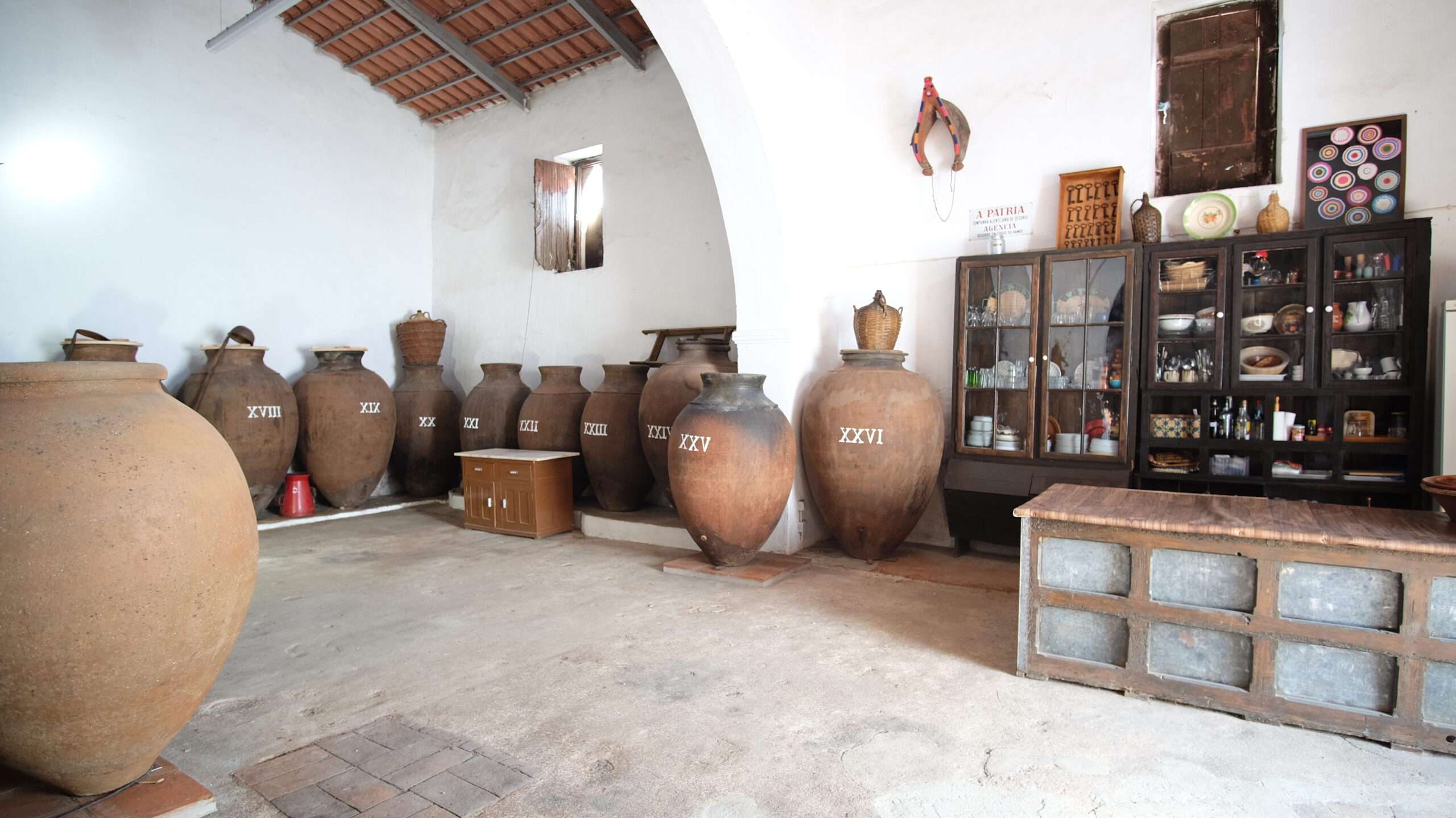
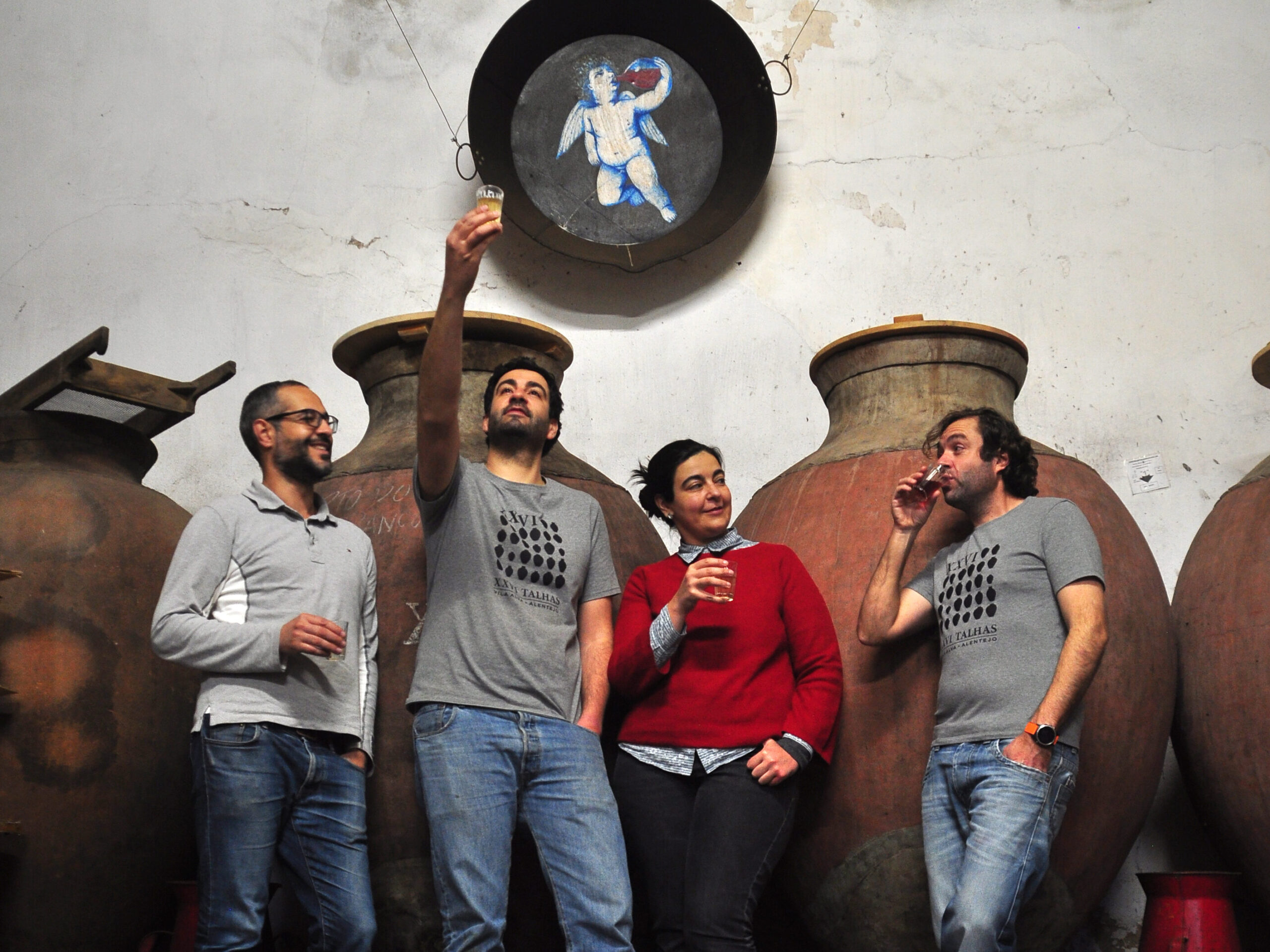
D: The Mestre Daniel winery belonged to my grandfather, António Daniel Tabaquinho dos Santos, a producer of talha wine for decades and known in the village as “mestre”, because he was also a carpenter. My sister Alda and I inherited the winery and, in 2018, together with our friend Ricardo and our cousin Samuel, we decided to reactivate it.
We recovered the old talhas and went back to producing wine as it has always been done in Vila Alva: with traditional varieties, “pezgadas” clay talhas (sealed with beeswax or natural resins) and methods handed down from generation to generation. The aim has always been to honour this ancestral tradition and keep it alive in modern times.
As the winery had 26 talhas, we decided to name the project XXVI Talhas, as this is a tradition that the Romans left in the Alentejo more than 2000 years ago.
M: To generate some debate: now that it seems that any winery in the world is nothing if it does not make a wine in amphora/talha, apart from the history, in your opinion, what would be the differences between a traditional Alentejo talha vinification and other wines made in amphora?
D: The growing interest in wines made in amphora/talha has led many wineries to experiment with this format, but traditional Alentejo talha winemaking is something very different and profound. To be talha wine, it has to be produced in the Alentejo, in talhas “pezgadas” with beeswax, pine resin and olive oil, using traditional varieties and specific methods handed down locally.
All the phases of the vinification process - fermentation, stabilisation and even filtration - take place inside the talha in a spontaneous and natural way, because the wine remains in the talha for months, with a long maceration and daily accompanying work.
In other countries, or even in other Portuguese regions, the term “amphora” often refers only to a brief or partial passage through the amphora: a week, a few days or only the end of the ageing process. In our opinion, the big difference lies in the depth of the method, the time, the ritual and the cultural connection: talha wine is a living, communal and artisanal technique, not just an alternative container.
M: I think it would also be interesting to explain the process you follow until the wine reaches the shelves.
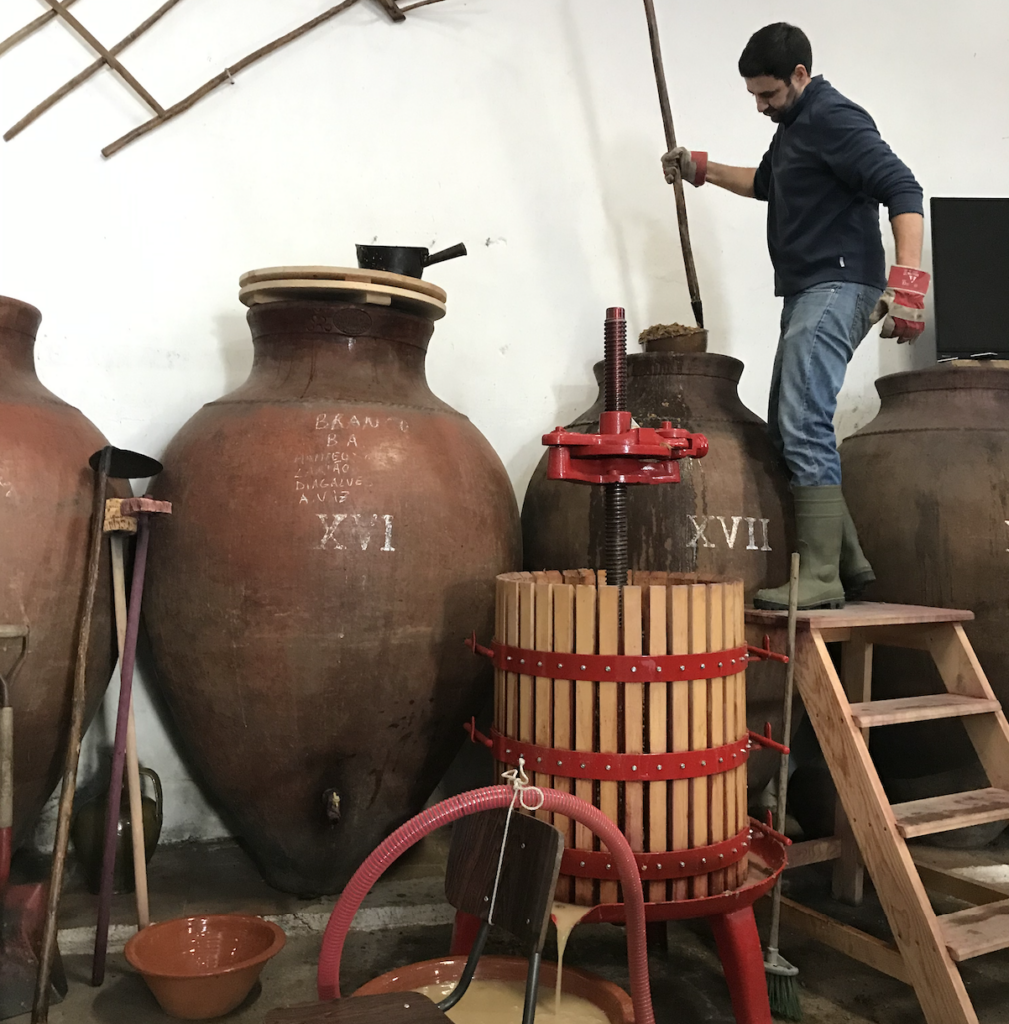
D: The whole process is done in the traditional way and entirely in talha. We use old vines, many of them more than 30 years old and some of them more than a hundred years old, with mixed varieties. The grapes are harvested by hand and the grapes are crushed and destemmed in the winery. The must, together with the skins and pips, is placed in the talhas, where it begins spontaneous fermentation, without any addition of yeast and without temperature control.
During fermentation we stir the talhas daily to avoid the accumulation of dough in the mouth and to ensure that they do not burst. When the fermentation is finished and the cold weather arrives, the dough starts to fall naturally.
In San Martin (São Martinho) we open the talha by the “batoque”, where we install a tap. At first the wine comes out cloudy, but after a while it starts to come out clean, filtered by the masses accumulated at the bottom: a natural filtration unique to this method.
The wine is then drained into an earthenware basin (alguidar), where it rests briefly before being harvested. In the case of the Tarecos, we bottle just after San Martín; in the case of the Mestre Daniel, only in February or March, after a longer ageing in the talha.
M: Last question: I personally have a lot of experience with old wines from many regions, but none with talha wines. I always thought they were wines to be consumed within the year. So, what is your opinion about the ageing potential of this type of wine?
The bottling of this type of wine is a very recent development: it only started to be done in the last 15 years, as traditionally this wine was drunk in the cellars directly from the talhas. The tradition has always been to drink the talha wine in the year itself, which is why there are hardly any old bottles.
Since 2018 we have been keeping wine of our own and the evolution has been very positive. We recently tasted a bottled talha wine from 2009, made by Ricardo's father, and it was excellent: lively and balanced.
We believe that these wines have great ageing potential, because they spend months in an oxidative environment inside the talha, which gives them strength and structure. When they reach the bottle, they stabilise and gain complexity over the years. In our opinion, they are wines that can age very well and can surprise for their longevity.