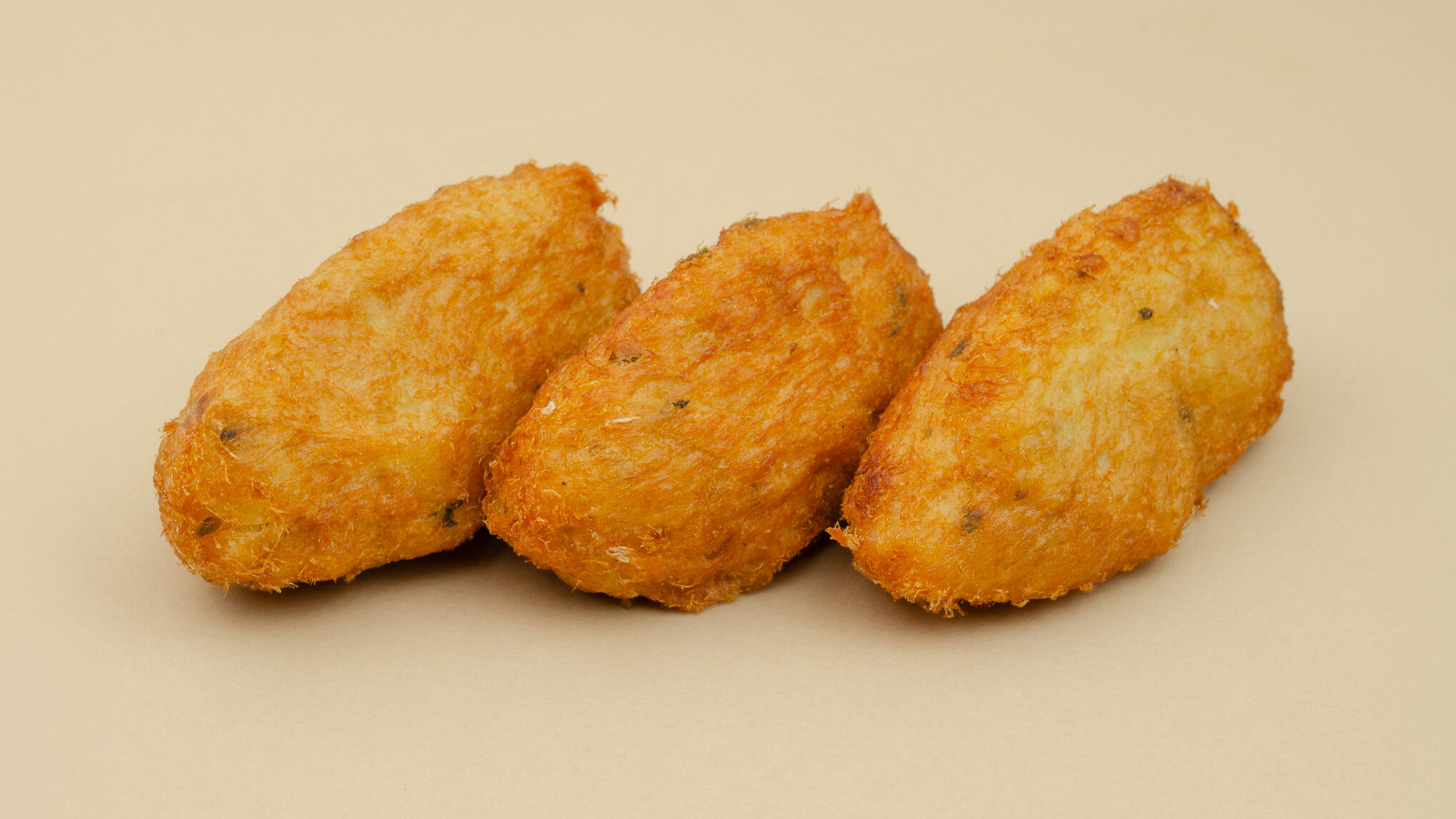
In Lisbon, they’re called pastéis de bacalhau. In Porto, bolinhos de bacalhau. The recipe is exactly the same. It’s a long-running debate, but it doesn’t really matter. At A Casa Portuguesa, we call them cod cakes when someone asks us what they are, pointing at the counter.
Fish that isn’t ‘Made in Portugal’
Cod do not swim in Portuguese waters. They never have. From the 16th century onwards, with long intervals in between, the Portuguese fleet would cross the Atlantic to fish for it in Newfoundland. The last cod-fishing vessels set sail for Newfoundland in 1974. Today, seven out of every ten kilos come from Norway.
Even so, few countries eat it quite like Portugal. It is said that there is a cod recipe for every day of the year. The most exaggerated claims suggest there are a thousand. The cod cake is probably the most popular, because it goes with everything: as a starter, for dinner or a late breakfast.
What is a cod cake?
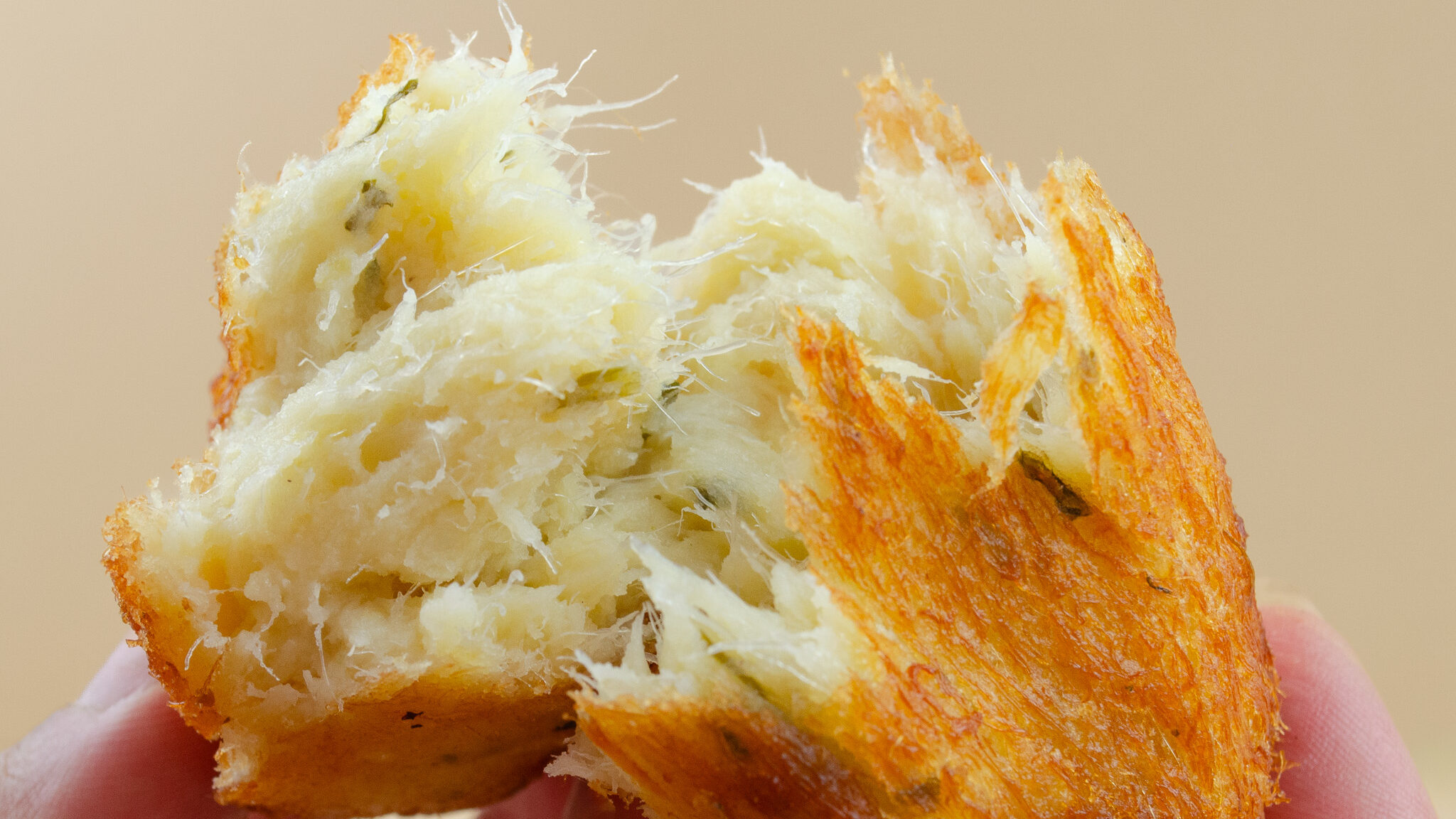
Cod crumbled meat, potatoes, onion, parsley and an egg to bind it together. It is shaped into quenelle using two spoons, and fried in plenty of oil. In Portugal, they are eaten standing up in a tasca or sitting down, with tomato rice.
Ingredients (makes about 30 cakes)
● 400 g of salted cod (dry weight)
● 400 g of floury potatoes, such as Agria or Kennebec
● 1 small onion, finely chopped
● 1 small bunch of fresh parsley, chopped
● 3 eggs
● Freshly ground black pepper
● Salt for boiling the potatoes
● Sunflower oil for frying
Time: 2 to 3 days for desalting and one hour for cooking.
Step by step…
- Desalt the cod
This is the bit nobody posts on Instagram. Cold water, in the fridge, for 2 days (tails and wings) to 3 days (fillets), depending on the thickness. Change the water every 24 hours. You can tell if a cod hasn’t been properly desalted from the very first bite, and there’s no putting it right. For pasteles, the trimmings or tails are fine. They cost less and nobody will notice the difference. - Cook the cod and flake it
Pop it into boiling water, turn off the heat and wait five minutes. Remove the skin and bones, then flake it with your fingers. - Boil the potatoes
Boil them in salted water, with their skins on, so they don’t absorb any water. Peel them whilst they’re still hot – that’s when they’re at their hottest – and pass them through a potato ricer. Then, be patient. They need to cool down completely. Water is the biggest enemy in this recipe, and a hot potato continues to give off steam. - Make the dough
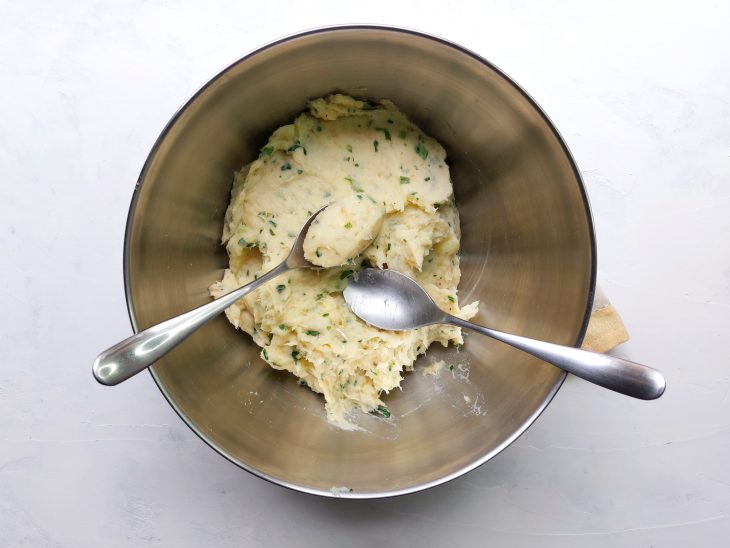
Mix the cod and the potato together. Add the onion and parsley. Season with pepper to taste. Stir in the eggs one at a time using a wooden spoon. The mixture is ready when it holds its shape. If the cod has been properly desalted, it will already provide enough salt. - Shape them using two spoons
Here’s the dish’s signature touch. Scoop up some dough with a spoon and transfer it to the other spoon several times, pressing down firmly. You’ll end up with an oval shape with three smooth sides. The French call it a quenelle. In Portugal, any granny can make them whilst chatting on the phone. The first five will probably turn out a bit misshapen. Fry them anyway. They’re for whoever’s doing the cooking. - Fry
Plenty of oil at 170–175 °C. Fry just a few at a time, as each one you add brings the temperature down. Fry for about three minutes, turning them until they are golden brown all over. Place on kitchen paper and serve.
Can they be frozen?
Yes, and it’s a good idea to do so. Freeze them raw and already shaped, spread out on a tray. Once they’re firm, transfer them to a bag. Fry them straight from the freezer, using a little less oil and cooking them for an extra minute. Your future self will thank you for it one Tuesday or another.
They go brilliantly with tomato rice or a green salad.
And if you don’t have three days to soak them to remove the salt, or don’t fancy the house smelling of fried food until Thursday, at A Casa Portuguesa we know exactly what you’re craving. That’s why we have them ready-fried or ready to fry (frozen), depending on how you feel that day.