Stale bread, garlic and hot water.
Let us let you in on a secret of Portuguese cuisine. One of the most delightful dishes you'll taste in Portugal is stale bread, soaked in hot water, with garlic. It's that simple. It's that good.
The Alentejo açorda exists because in the Alentejo you had to eat something with whatever was available. And what was there was bread from the day before, garlic, olive oil and coriander that grew on its own. This recipe was not invented by anyone with time to spare, it was invented by hunger. The result is a dish that has been on the table for centuries and no one has managed to improve on it. Yes, there are some delicious variations, but today we are going to stick to the classics.
It is not a soup and it is not a stew. It has its own category. The bread absorbs the hot broth, swells, gives in a little, but not completely, and is left with a dense, spongy texture. The poached egg on top finishes it off. The fresh coriander is absolutely non-negotiable.
Its name comes from Arabic, ath-thorda. Wet mix.
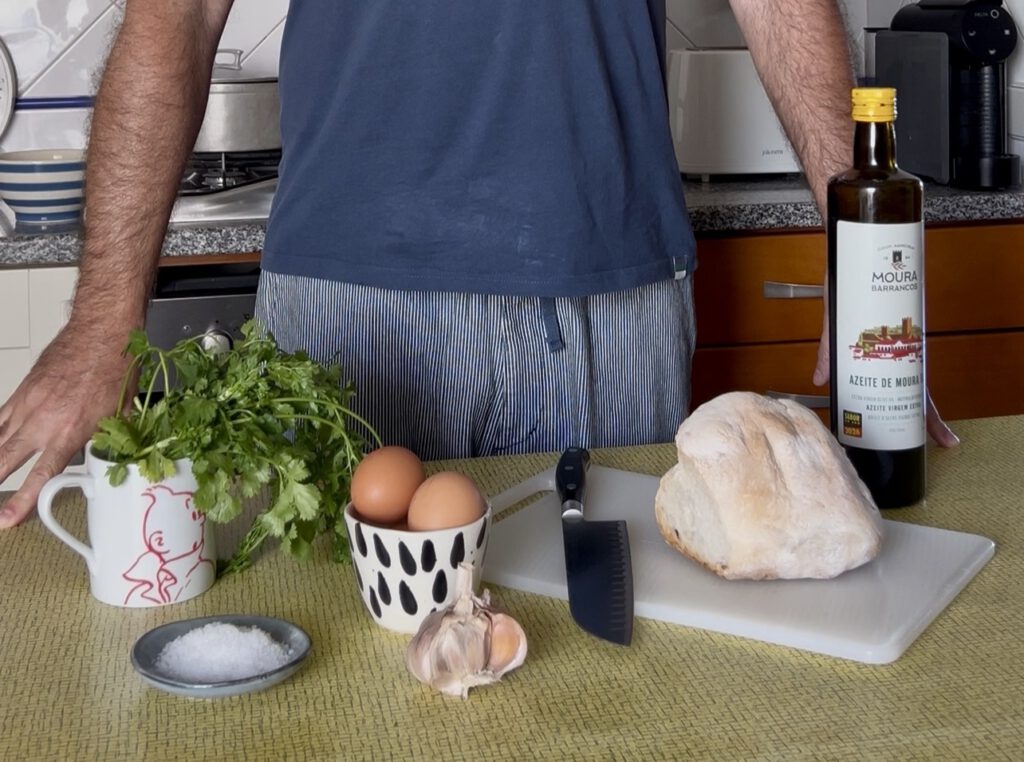
What you need (for 4 persons)
200 g of two-day-old rustic bread - sourdough, baker's loaf, whatever you have with a real crust. Not sliced bread, it looks terrible. 4 cloves of garlic. A large bunch of fresh coriander. 800 ml of water. 6 tablespoons of extra virgin olive oil. 4 eggs. coarse salt and black pepper.
How it is done
Crush the garlic with coarse salt in a mortar and pestle until it becomes a paste, add half of the chopped coriander and continue crushing. Do not skip it.
Heat the stock to a gentle boil, add the majado and half the oil, stir and leave to stand off the heat for a couple of minutes.
Break the bread into irregular pieces with your hands and distribute it in the bowls. Pour the hot broth over it a little at a time. Wait for a minute. The bread should puff up, but not completely fall apart.
Poach the eggs in water with a splash of vinegar and place one in each bowl. Add fresh coriander, the rest of the oil and, if you like, black pepper.

The açorda alentejana was one of the finalist candidates for the 7 Wonders of Portuguese Gastronomy.
You will be able to see the recipe on Instagram very soon.